

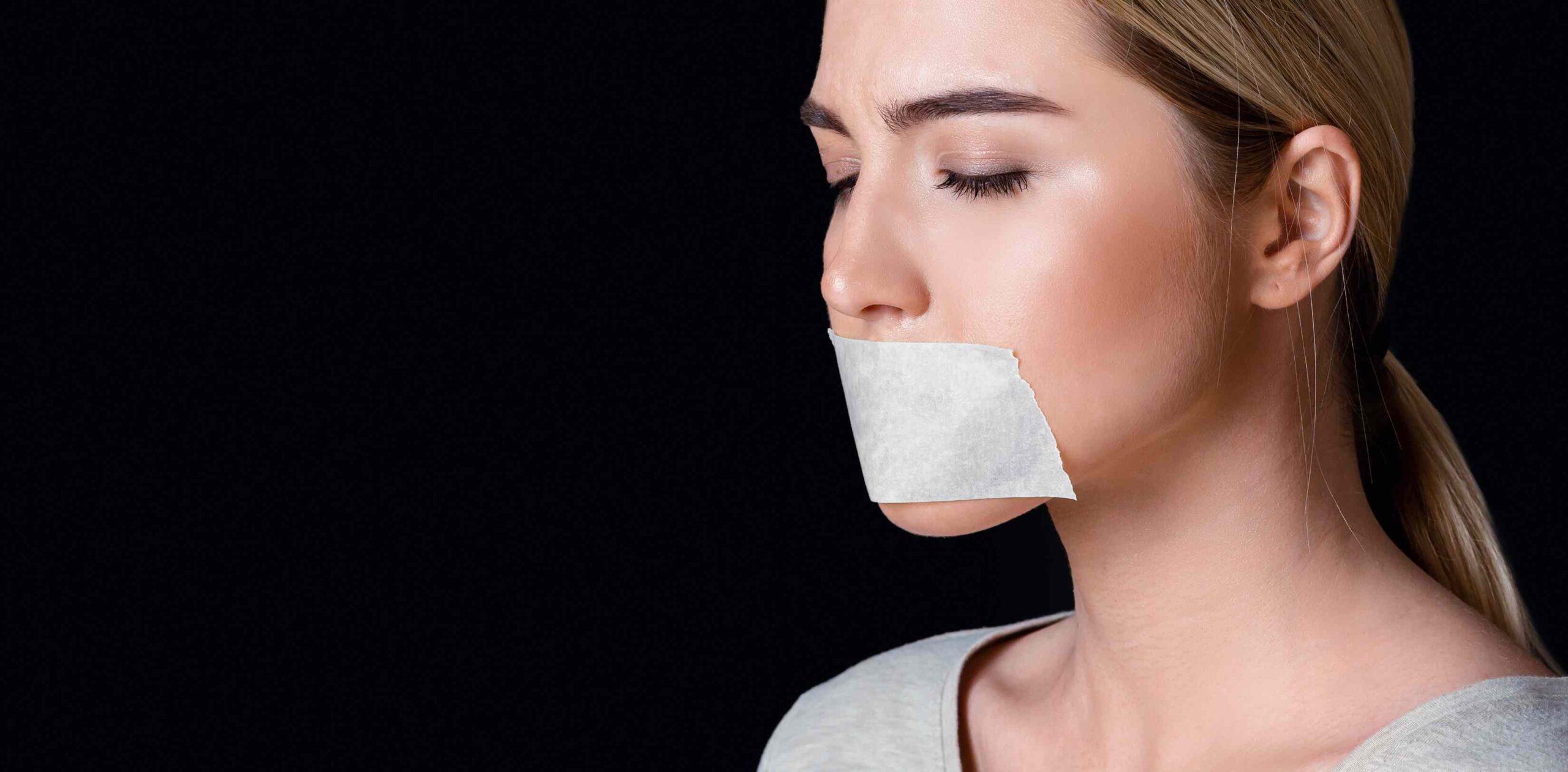
If you snore at night, wake up with a dry mouth, or have been diagnosed with sleep apnea, you may have seen a surprisingly simple solution online: mouth taping.
The idea is to place tape over your lips before going to sleep to encourage nasal breathing.
It sounds straightforward.
But if you’re snoring because your airway is narrowing during sleep, taping your mouth shut doesn’t address the underlying problem.
For patients in Barberton, OH, the more important question isn’t simply:
“Can mouth tape make me stop snoring?”
It’s:
“Why am I snoring, and could it be a sign of sleep apnea?”
What Is Mouth Taping?
Mouth taping involves placing adhesive tape over the lips during sleep to discourage mouth breathing and encourage breathing through the nose.
The trend has gained significant attention through social media, where proponents have promoted it for snoring, dry mouth, sleep quality and other supposed benefits.
But popularity doesn’t establish medical effectiveness.
A 2025 systematic review examined the available evidence surrounding mouth taping in people with mouth breathing, sleep-disordered breathing, and obstructive sleep apnea. Researchers screened 120 articles and found only 10 studies involving 213 patients that met their inclusion criteria.
The authors concluded that the available evidence was insufficient to establish clear benefits and identified potentially serious safety concerns.
Can Mouth Taping Stop Snoring?
There isn’t enough evidence to recommend mouth taping as a reliable treatment for snoring.
One small study included in the systematic review found reductions in snoring in a selected group of patients, but the overall evidence remains limited.
Cleveland Clinic similarly reports that there isn’t strong enough evidence to support mouth taping as a treatment for snoring or sleep disorders.
That matters because snoring isn’t always just an annoying nighttime sound. It can be a sign that air is having difficulty moving through a narrowed airway. And sometimes the person doing the snoring doesn’t realize how significant the problem is.
Can Mouth Taping Be Dangerous With Sleep Apnea?
It can be risky, particularly when nasal breathing is impaired.
If your nose is congested or obstructed, taping your mouth removes your ability to compensate by breathing through your mouth.
The 2025 systematic review specifically identified potential risks, including asphyxiation in the presence of nasal obstruction. Many of the studies reviewed actually excluded people with nasal obstruction or other nasal pathology.
Cleveland Clinic also warns against mouth taping when someone has conditions such as nasal obstruction, chronic allergies, sinus infections, enlarged tonsils, or a deviated septum.
So if you already struggle to breathe through your nose, forcing your mouth closed during sleep is not a sensible DIY solution.
What If I Have Sleep Apnea?
This is where the trend becomes particularly concerning.
Obstructive sleep apnea occurs when the upper airway repeatedly becomes blocked or narrowed during sleep.
A person may stop breathing, partially awaken, gasp, or experience repeated oxygen-level changes without fully realizing what’s happening.
Mouth taping does not remove the obstruction causing obstructive sleep apnea.
It doesn’t enlarge the airway.
It doesn’t prevent the throat tissues from collapsing.
And it doesn’t replace established sleep-apnea treatments.
If you’ve been diagnosed with sleep apnea, your treatment should be based on the severity and cause of your condition, not on a social-media trend.
What Are the Warning Signs of Sleep Apnea?
Snoring is one possible warning sign, but it isn’t the only one.
Pay attention if you experience:
- Loud or persistent snoring
- Witnessed pauses in breathing
- Gasping or choking during sleep
- Waking repeatedly during the night
- Morning headaches
- Dry mouth upon waking
- Daytime sleepiness
- Difficulty concentrating
- Waking without feeling rested
- Irritability or mood changes
- High blood pressure
You can even have sleep apnea without obvious snoring.
Cleveland Clinic notes that obstructive sleep apnea can occur without audible snoring and that symptoms such as daytime sleepiness, fatigue, morning headaches, and repeated nighttime awakenings can still occur.
That’s why the absence of loud snoring doesn’t automatically rule out a sleep disorder.
Why Does Mouth Breathing Happen?
Mouth breathing during sleep can have several causes.
For example:
Nasal congestion: Allergies, colds, or chronic inflammation can make nasal breathing difficult.
Deviated septum: Structural narrowing can reduce airflow through the nose.
Enlarged tissues: Tonsils or other tissues can contribute to airway restriction.
Habitual mouth breathing: Some people develop a long-standing breathing pattern.
Sleep-disordered breathing: Airway narrowing during sleep can encourage mouth opening.
If you’re regularly breathing through your mouth at night, it’s worth identifying the reason instead of simply trying to prevent your mouth from opening.
Is Mouth Taping Different If I Have a CPAP?
Yes and this is an important distinction.
A 2025 randomized crossover study involving 62 adults with obstructive sleep apnea who were already using CPAP found that hypoallergenic mouth tape improved CPAP adherence and several reported symptoms in patients with mouth breathing.
But this does not mean that someone with untreated sleep apnea should start taping their mouth.
Those participants were already undergoing CPAP treatment and were studied under specific conditions.That is very different from using mouth tape as a replacement for sleep-apnea diagnosis or treatment.
In other words:
Mouth tape studied as an adjunct to CPAP is not the same thing as mouth tape used as a standalone sleep-apnea treatment.
What About Sleep Apnea Appliances?
Some patients with obstructive sleep apnea may be candidates for an oral appliance.
These devices are professionally fitted and designed to help manage the airway during sleep.
Austin Park Dental’s current service structure includes dedicated Sleep Apnea Appliances and Sleep Apnea Therapy, making professionally evaluated oral-appliance treatment a much more appropriate topic to discuss with a dental provider than attempting to tape the mouth shut without an evaluation.
Not every patient is a candidate for every treatment.
The appropriate approach depends on your diagnosis, severity, anatomy, medical history, and other factors.
Could Your Jaw or Bite Be Part of the Picture?
Your oral and facial anatomy can influence the airway.
Jaw position, dental relationships, tongue position, and other anatomical factors can all be relevant when evaluating certain sleep-related breathing problems.
That doesn’t mean orthodontics or dental treatment will cure every case of sleep apnea.
It means a comprehensive evaluation can help determine whether oral or facial factors may be contributing to the problem.
Austin Park Dental’s oral and maxillofacial service specifically includes TMJ, facial pain, misaligned jaws, and sleep apnea, reflecting the overlap between oral structures and several conditions affecting the head, neck, and airway.
What Should Patients Do Instead of Mouth Taping?
If you’re snoring regularly, don’t start with tape.
Start with an evaluation.
A dentist or physician can help determine whether your symptoms suggest sleep-disordered breathing and whether additional testing, such as a sleep study, may be appropriate.
If sleep apnea is diagnosed, treatment options can include approaches such as CPAP, professionally fitted oral appliances, lifestyle changes, or other interventions depending on the individual.
The goal is to keep the airway open, not simply keep the mouth closed.
For patients in Barberton, Akron, Norton, Wadsworth, Green, and nearby communities, Austin Park Dental provides dental and sleep-related care in Barberton.
The practice is located at 801 E. State St., Barberton, OH 44203 and offers sleep apnea services alongside TMJ and other comprehensive dental care.
If you regularly snore, wake up exhausted, or suspect you may have sleep apnea, schedule an appointment for an evaluation.
You can also meet our doctors and discuss your symptoms with the Austin Park Dental team.
Don’t Tape Over a Potential Airway Problem
Mouth taping is attractive because it appears to offer an easy answer to a complicated problem. But snoring and sleep apnea aren’t simply problems of having your mouth open.They can indicate that air isn’t moving normally through the upper airway during sleep.
The 2025 systematic review of mouth taping found limited evidence of benefit and raised safety concerns, particularly when nasal obstruction exists.
That makes the safest strategy straightforward:
Find out why you’re snoring before trying to silence it.
If you have sleep apnea, treat the condition not just the symptom. And if you’re considering mouth tape because you wake with a dry mouth or routinely breathe through your mouth, talk with a healthcare professional before experimenting with it.
Your nighttime breathing deserves more than a strip of tape.
Frequently Asked Questions (FAQ’s)
Is mouth taping safe for people who snore?
Mouth taping is not an established treatment for snoring and may be risky when nasal airflow is restricted or an underlying sleep disorder is present.
Can mouth taping treat sleep apnea?
No. Current evidence does not establish mouth taping as a standalone treatment for obstructive sleep apnea, and it should not replace professional diagnosis or proven therapy.
Can mouth taping make sleep apnea worse?
It may create breathing difficulties when nasal airflow is obstructed, which is why people with suspected or diagnosed sleep apnea should discuss mouth taping with a healthcare professional before using it.
What are safer alternatives to mouth taping for sleep apnea?
Depending on the diagnosis, professionally supervised options can include CPAP, oral appliances, positional strategies, lifestyle measures, and other treatments recommended by a qualified healthcare professional.
Should I see a dentist if I snore every night?
Yes. Persistent snoring can be a sign of sleep-disordered breathing, and a dentist familiar with sleep-related conditions can help determine whether further evaluation or sleep-apnea treatment may be appropriate.
New Patients & Emergency Appointments Welcome!
