

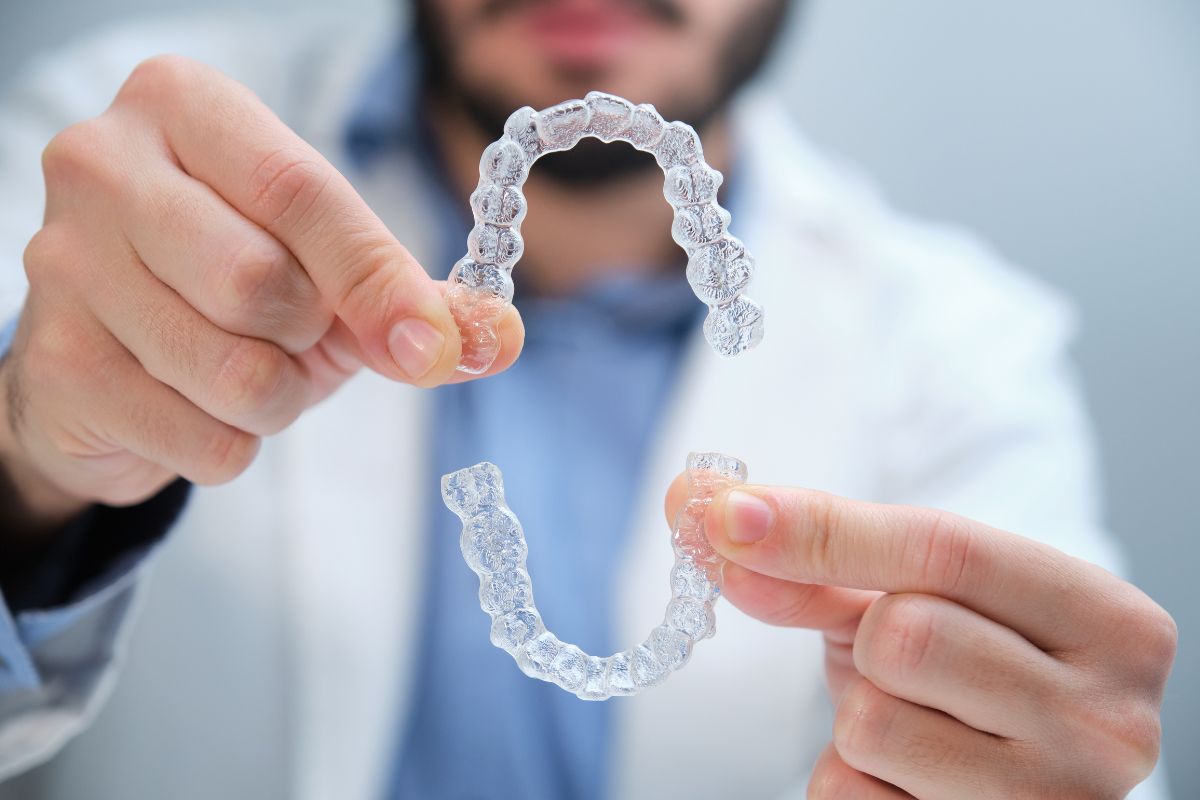
Invisalign has transformed orthodontics by offering a discreet and comfortable way to straighten teeth. But if you have missing teeth or dental crowns, you may wonder if Invisalign is still an option. The good news is that in many cases, Invisalign can work effectively for patients with these dental concerns. Understanding how it works with different dental conditions will help you make the right choice for your smile.
Invisalign with Missing Teeth
Patients often ask if they can use Invisalign when missing one or more teeth. The answer depends on your specific situation. Invisalign can help close small gaps caused by missing teeth, but in other cases, your dentist may recommend using aligners to create proper spacing for a future dental implant.
For example, if you plan to replace a missing tooth with an implant later, Invisalign aligners can help guide your teeth into the best position to support that treatment. Aligners can also prevent neighboring teeth from drifting into the space. If you live in Ohio, you can even explore Invisalign treatment in Barberton as part of a personalized dental plan.
Invisalign with Dental Crowns
Having crowns does not automatically rule out Invisalign. Since aligners apply pressure to teeth to shift them, dentists carefully evaluate the strength and placement of your crowns before starting treatment. In many cases, Invisalign works well with crowns because the aligners do not require brackets or wires bonded to your teeth.
However, your dentist may adjust your treatment plan if your crown covers a tooth that needs to move significantly. Attachments used with Invisalign sometimes bond less securely to crowns than to natural teeth, but dentists can use techniques to improve their effectiveness. This is why a professional evaluation is so critical before starting.
The Role of Dental Implants and Bridges
If you have dental implants, Invisalign cannot move the implant because it is fixed in the bone. Invisalign can move the natural teeth around the implant to create a better bite or improve alignment. The connected teeth cannot move independently with dental bridges, so the aligner treatment may need modifications.
Dentists evaluate each case individually to see how aligners can enhance function and aesthetics without disrupting restorations.
Why a Consultation Matters
Every smile is unique. Missing teeth, crowns, implants, and bridges all affect how Invisalign treatment should be planned. Only a dentist can determine whether aligners will work for you and how they can be tailored to your needs.
If you are considering Invisalign, your dentist will take digital scans, evaluate your restorations, and design a treatment plan that supports both your oral health and your long-term goals.
You can often get Invisalign even if you have missing teeth or crowns, but the right approach depends on your situation. Working with an experienced dentist can straighten your teeth, protect your dental restorations, and prepare your smile for future treatments.
Are you ready to find out if Invisalign is right for you? Schedule your Invisalign treatment plan consultation today and take the first step toward your best smile.


New Patients & Emergency Appointments Welcome!
